Programme pédagogique
Des premiers accords du violone à 8′ (en sol ou en la), au violone à 16′ (accordé en ré ou en quartes), à la contrebasse viennoise à 5 cordes (avec son accord très spécifique), à la basse à 3 cordes (diversement accordée), à la tenue d’archet soit main au-dessus, soit en-dessous,… ce sont toutes des variantes de l’instrumentarium de basse historique plus large, que j’ai toutes incorporées dans ma profession d’interprète, et que je fournis en tant que guide au cours des études au conservatoire.
Recognizing that each student has a unique background, story, and preferences, my approach is to accommodate individual wishes. However, I also encourage students to gain exposure to the unfamiliar aspects of historical bass instruments, such as instruments with different tunings and various historical bows. This approach aims to provide a well-rounded understanding of the historical context for bass players in the baroque era, emphasizing the importance of adaptability.
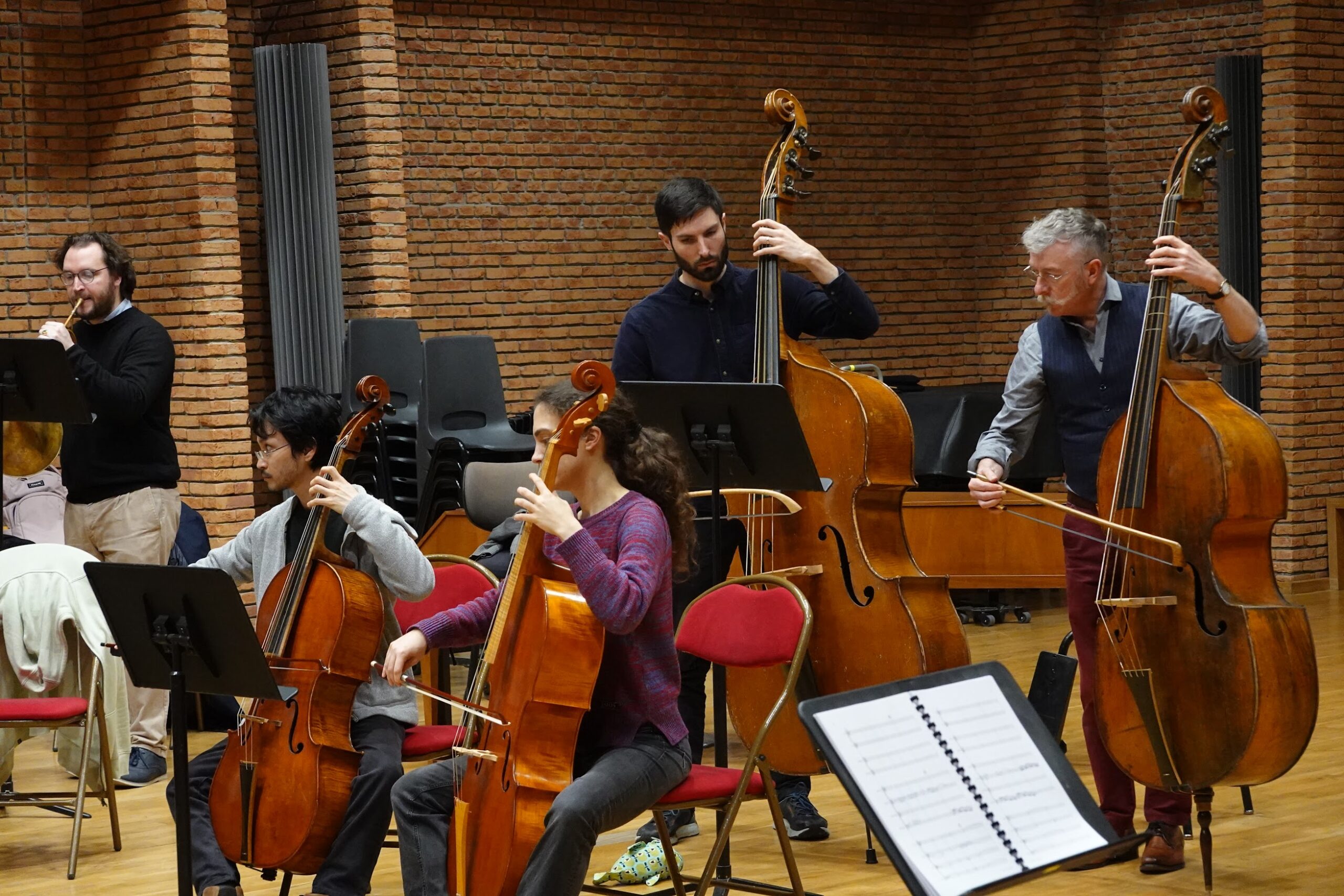
The role of all continuo instruments holds a vital place in the musical language of the Baroque period. Given the significance of the polyphonic tradition in the baroque language, the historical double bass and violin course places special emphasis on regular bass consort classes, which I coordinate. These classes provide a crucial opportunity for bass players to refine their chamber music skills and deepen their understanding of counterpoint. A keen, intuitive grasp of harmony, along with its practical application and execution on a specific instrument, is fundamental to a comprehensive education in early music. In my teaching approach, this aspect of bass playing is as crucial, if not more so, than the technical mastery of the instrument itself.
 English (UK)
  Français