Programme pédagogique
I would convey to my students, in paraphrasing: Pay attention to the breath and the act of sharing!
According to Claude Lévi-Strauss, an artist never journeys alone on the path of creation. Similarly, a musician, especially a wind instrumentalist, must play in close synergy with his or her colleagues.
The historical clarinet and chalumeau course offer extensive training for clarinetists specializing in historical performance practice on period instruments. Additionally, this course provides the opportunity for a stylistic introduction, complementing the training of "modern" clarinetists with insights gained from historical practice.
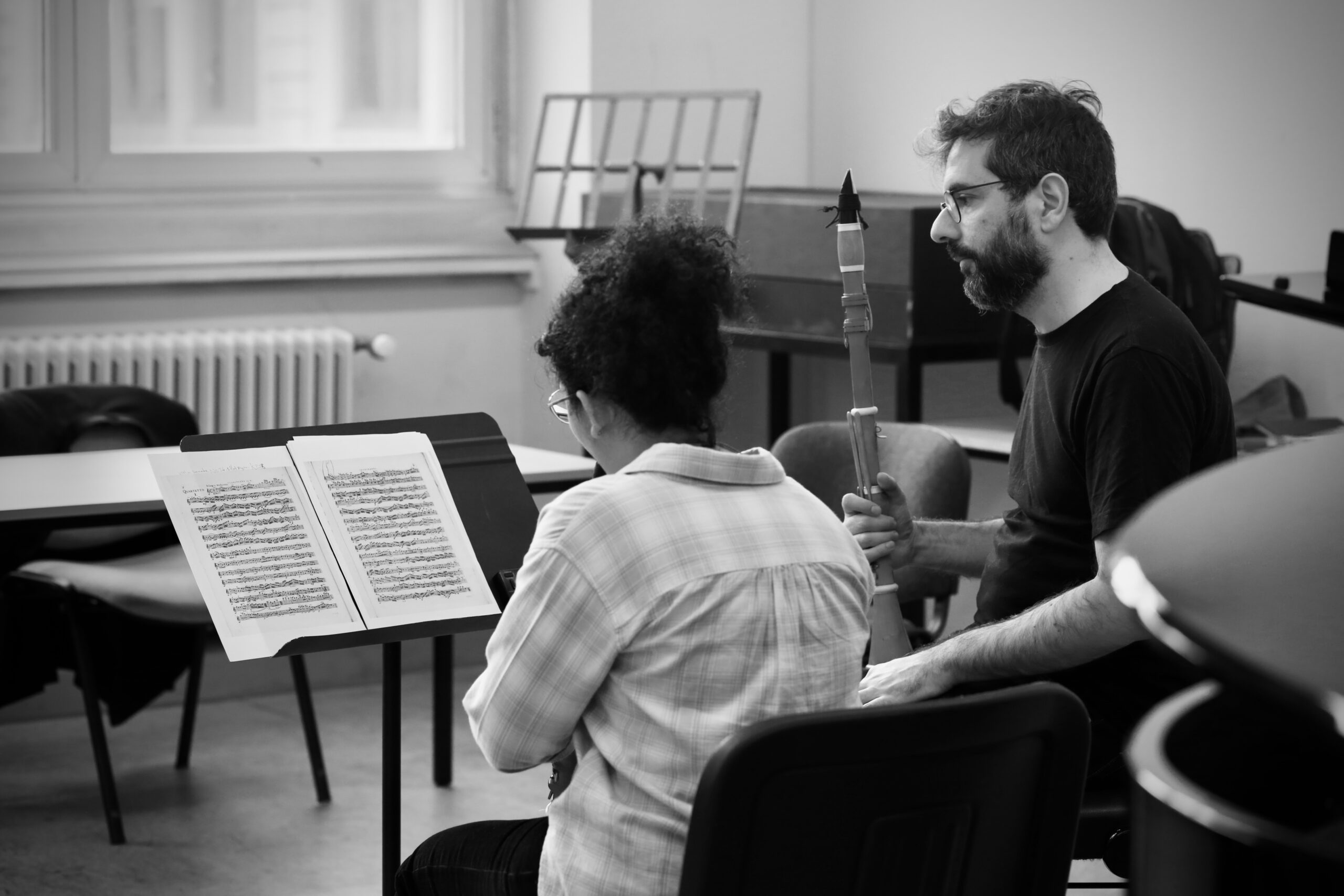
As performance on original instruments has emerged as a crucial aspect in exploring Baroque, Classical, and Romantic repertoires, the study of historical clarinet and chalumeau has become an essential and integral part of the artistic journey for clarinet students at a Conservatoire.
Today's historical clarinet class comprises students from various nationalities, drawing individuals from diverse backgrounds over the years. What unites them is perhaps the shared desire to dedicate time to exploring the repertoire and, most importantly, to make informed choices regarding the type of instrument for historical interpretations.
Even in contemporary times, numerous clarinettists embark on their professional journeys without undergoing formal academic training.
Studying historical clarinet at the Brussels Conservatoire entails exploring a diverse array of instruments and reeds, capitalizing on discoveries made over the past 30 years. This comprehensive approach enhances skills and enables students to engage with a broad repertoire spanning from the Baroque to Stravinsky.
 English (UK)
  Français